|
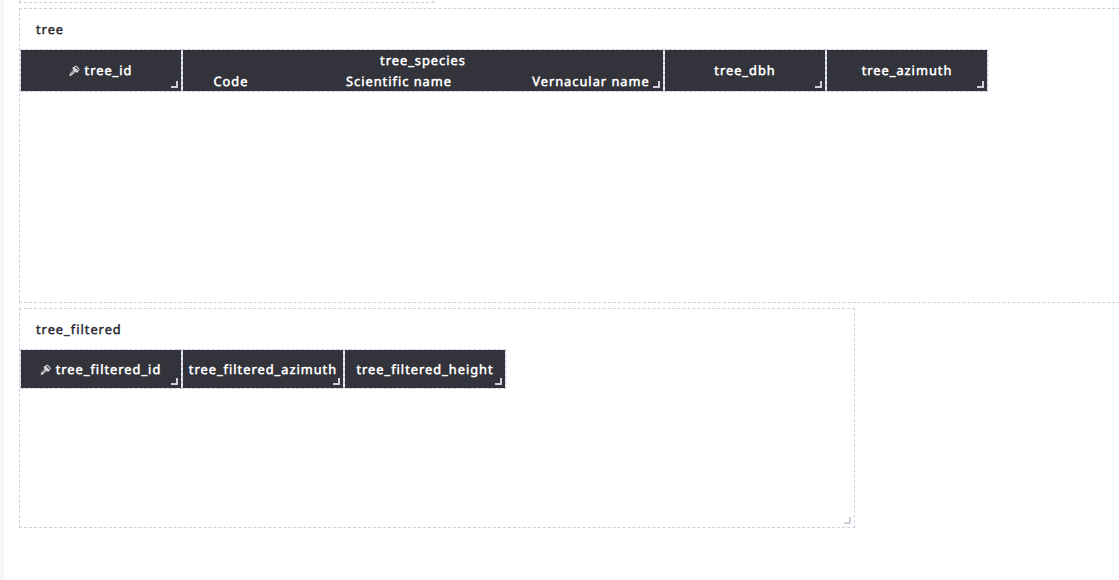
Dear OFA team, I am trying to implement a specific workflow in OFA and would like to know if it's possible. Here is the scenario:
I know this could technically be achieved within a single form by dynamically changing the visibility of the height attribute. However, due to our workflow requirements, we specifically need a two-form setup where the second form only shows the filtered trees. Is there a feature or option in OFA that supports this kind of multi-form scenario? |

|
Dear User,
Could a feature like this work for your use case? We would love to hear your thoughts. |

|
Dear Stefano, has this solution already been implemented? I tried the steps below, but the automatic creation of records for adding height to filtered trees didn't work. Note that the first and second entities/form are on the same level, and both are child entities of the parent entity "Plot". First form (display trees): multiple enabled attributes: treeID as key, species, dbh and azimuth Second form (display filtered trees only): multiple & auto-create minimum items enabled. Validations->Min count expression = count(trees[azimuth>100]) attributes: ID as readonly with default value expression: index($context) + 1 treeID_reference as readonly with default value expression: trees[azimuth>100][index()-1].treeID height as editable number. |
|
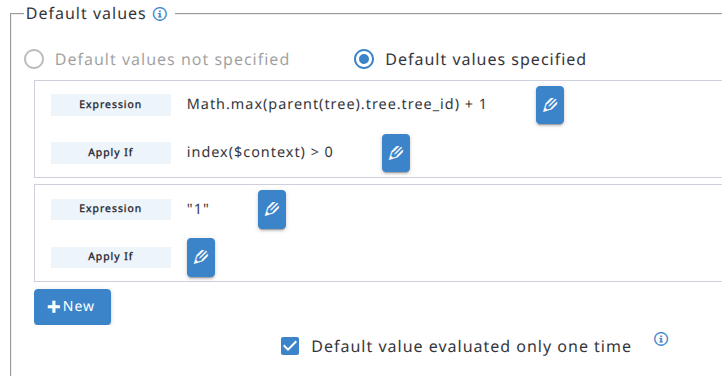
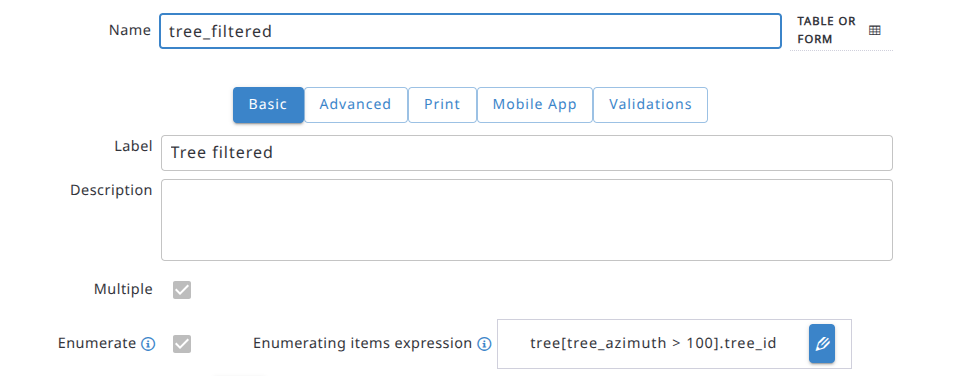
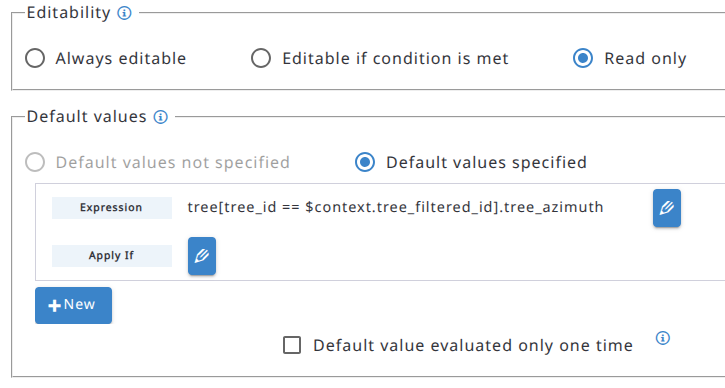
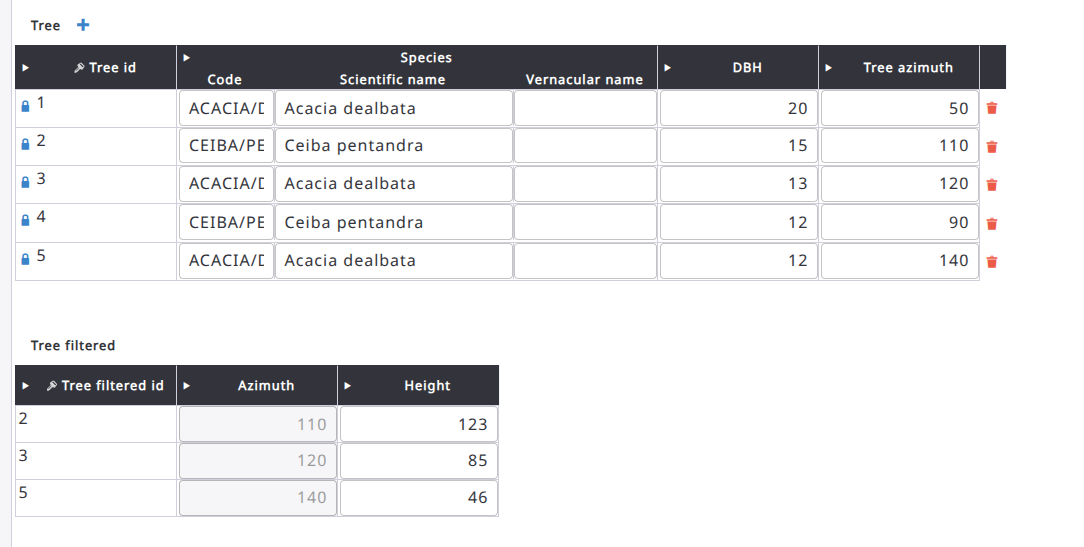
Dear user, If you want the ID to be auto-incremental, you will need to define a custom default value expression: Next, the filtered tree entity must be marked as Enumerate, and you should define an Enumerating items expression to supply the category items used to generate the rows for the filtered tree entities. The ID attribute in the filtered entity should be a code attribute marked as a key. It will act as the enumerator and function automatically as read-only (no need to manually mark it as read-only). If you need to extract specific values from the source table, use an expression like this: This will produce the following final result: Hopefully this can fit your needs. |